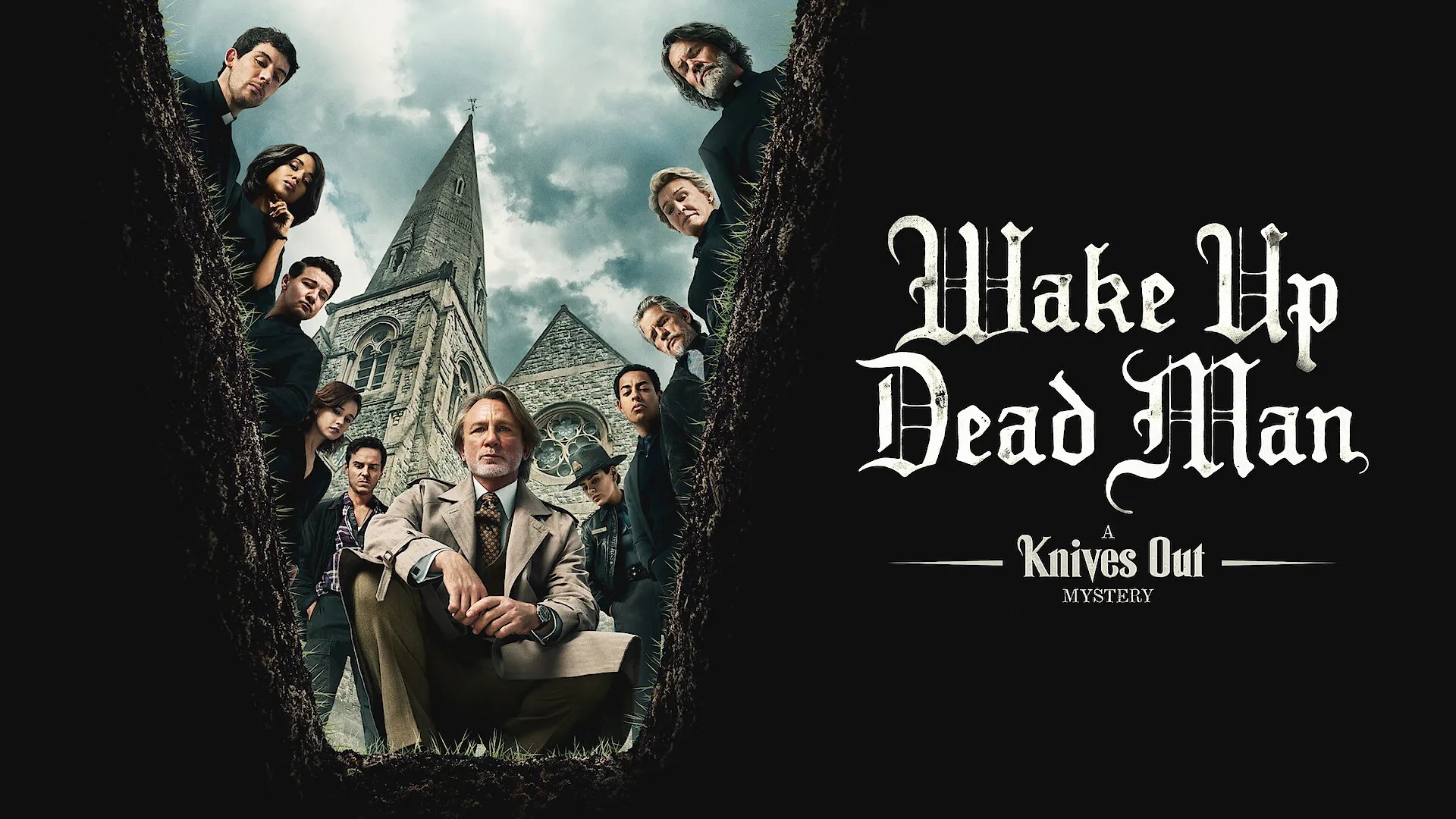
Wake Up Dead Man: A Knives Out Mystery

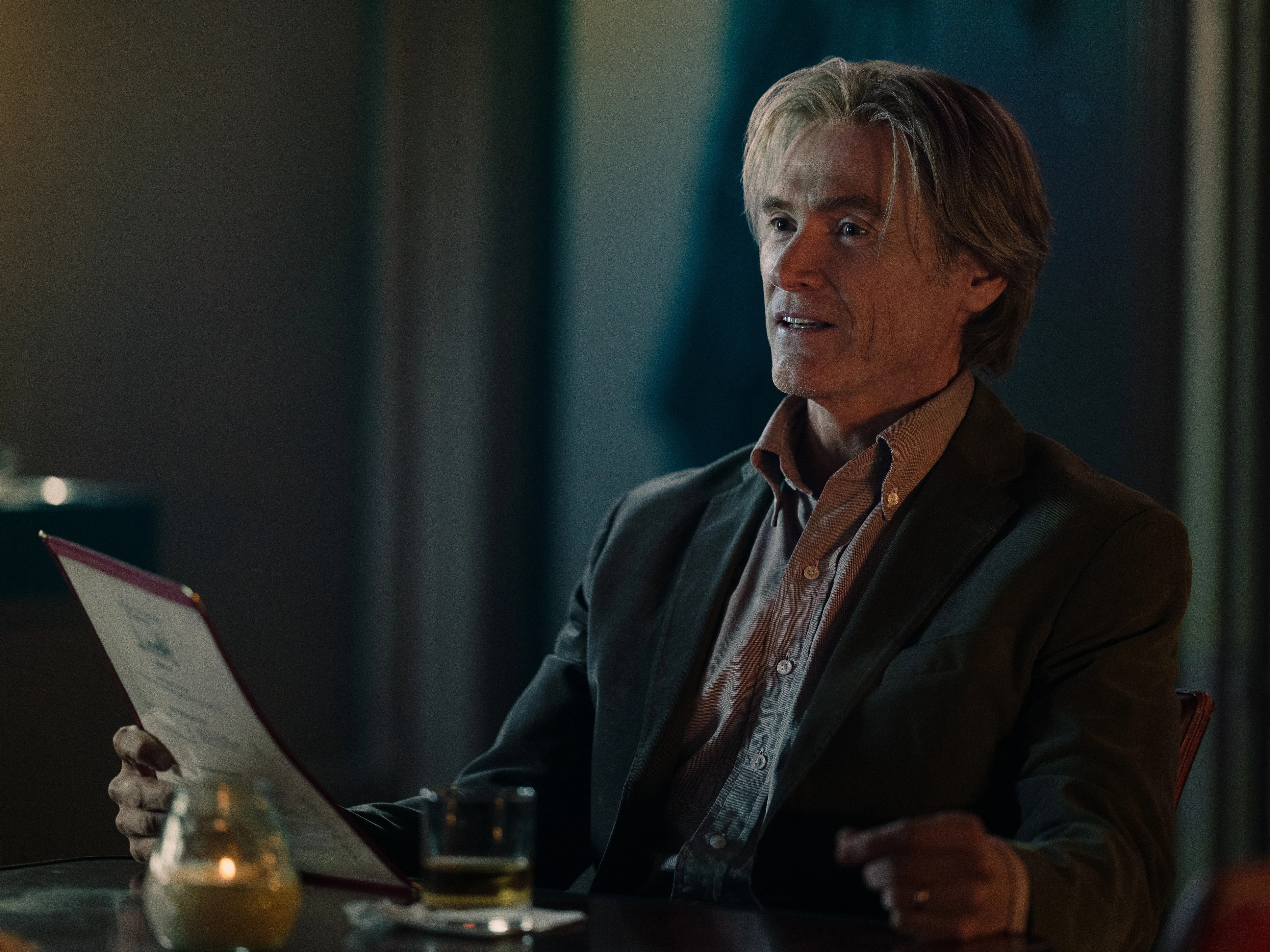
Wake Up Dead Man: A Knives Out Mystery is the third installment in the Knives Out mysteries, which feature direction by Rian Johnson and star Daniel Craig as Southern detective Benoit Blanc. The films are Agatha Cristie-style mysteries that begin with a murder and involve a whole crew of potential suspects, all who gather at the end for the full revelation and explanation by Blanc.

It has its problems, but it’s also incredibly great in a couple of ways, which I’ll get into later.

There’s a lot here. The film is complicated, far too long and doesn’t always make sense. For fans of the impressive cast, however, and for those who love jumping on this particular mystery film bandwagon, it can be a lot of fun. The setting this time is a small cult-like Catholic church in upstate New York, which (as a Northern New Yorker) at least looks beautiful in the overhead shots.

I will leave it to other writers to get into the weeds on the action. For the sake of my sanity and time, I will continue this article with bullet points.

  • Daniel Craig has clearly relaxed into his character, and he’s never been better in the role. While the accent is always a little head-tilting, he wears Benoit Blanc like a warm blanket. He’s fun to watch, and he seems to be enjoying the part more than ever.
  • The first half hour should have been much shorter and to the point in setting up the plot. It seems indulgent and unnecessarily crude and childish. The entire set-up could have been done more quickly and elegantly (speaking cinematically).
  • The great Glenn Close is given a role that is embarrassingly shrill and unoriginal as the harpy who sees demons everywhere and apparently must shriek her responses. But at the end, the talented actress connects with the character in some lovely closing moments.
  • It was nice to see Jeremy Renner back after his horrendous but heroic accident. But his role was bland and he looked the worse for wear.
  • I generally like and enjoy what Josh Brolin does, but this role has him locked into a demagogic role that is unbelievable and uncomfortable from the start, and not in the good “mystery film” way. My only condolence was that this was not the typical Protestant demented clergy, but it was a Catholic variation on that theme.  He chewed every piece of furniture in the entire town, which he was called to do. But that got old after a while.
  • Andrew Scott, Thomas Haden Church, and Kerry Washington are wasted in roles that are neither engaging nor challenging for them. They all move the plot along and bring their star power to their roles to some extent. But the film doesn’t allow them to shine. Mila Kunis, however, was surprisingly good in an unexpected casting choice.
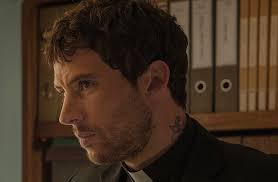
  • Saving the best for last: Josh O’Connor was excellent in the type of role that is usually handled terribly. He plays the tormented priest who lands in Josh Brolin’s church, sees the cultic nature of this man and this small church, and works to fix it. Between Mons. Wicks’ (Brolin) overbearing and controlling behavior, and the stories that eventually come to light regarding the murder and the “goings-on” of the various church members, there is a great deal to fix. But O’Connor brings his Father Jud to full-blooded life. O’Connor (“The Crown,” Challengers) has been the “next big thing” for a few years now and has finally become a real thing in 2025. His character is the struggling minister somewhat in the mode of PBS’s “Grantchester,” but deals with his demons in a visceral and realistic way that finally, finally seems genuine and resonates to someone who shares his true faith yet also understands his mental and spiritual battles.

Most representations of struggling ministers either make my eyes glaze over with the evident anti-faith context of the show (yawn, yawn), or the very shallowness of both character and struggle. O’Connor’s Father Jud is the most realistic struggling minister I can remember, not just because O’Connor gives a great performance, but also because Father Jud has real, deep faith and a desire to live out that faith in a world that has been working against him. While there are a few slight doctrinal issues I could take issue with, this is a man of deep faith in Jesus Christ who isn’t afraid to pray, often declares who Jesus is to him, and whose Christian life is pulsating with passion and deep sincerity.

  • Lastly, shockingly, the film doesn’t make fun of Father Jud’s faith, but shockingly, affirms it. I say “shockingly” twice not only as an homage to Casablanca, but because I can’t recall a film from a major studio outside of faith-based studios upholding such a strong profession of profound belief in Christ. This isn’t David Niven in The Bishop’s Wife or other traditionally bland and generic Protestant ministers. And thank God that there isn’t a hint of Elmer Gantry or Robert Mitchum’s terrifying Rev. Powell in Night of the Hunter. Father Jud’s faith is never made fun of, and it drives him forward and sustains him in the best way. For someone who is so very tired of seeing either ministers with dark and pervy pasts, or passionless lightweights that bear little resemblance to real ministers that I know, this newest Knives Out edition is breathtakingly refreshing. For those of who truly believe and want to live our lives for Christ, it is invigorating to at long last see ourselves on screen.

Posted in Uncategorized | Tagged , , , , , , , , , , , , , , , , , , , , , | Leave a comment

Jay Kelly

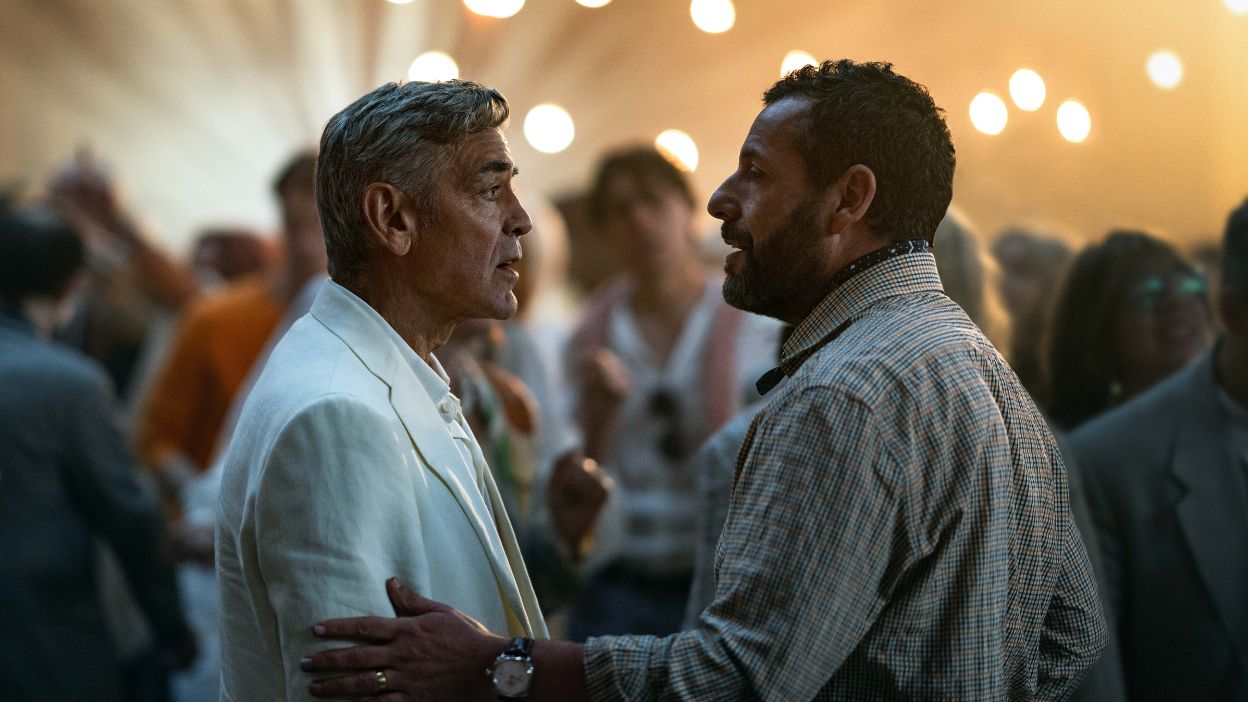
Jay Kelly is the newest film starring George Clooney. It’s directed by Noah Baumbach (Oscar nominations for best adapted screenplay for Barbie, and for best original screenplay and director for Marriage Story). The story is written by Baumbach and actress Emily Mortimer (Lovely and Amazing and Lars and the Real Girl). That, despite the fact it was produced by Netflix, had the shortest of theatrical runs, and is now streaming on that streaming service, it should still be considered a “real movie.” That’s a term that is in danger or at least in flux right now, especially with the Warner Bros. kerfuffle. But this movie should be put in the category of a real film with a very good director, a thoughtful script, beautiful cinematographer by Oscar-winning Linus Sandgren (La La Land), and an excellent crew of accompanying players, including probable Oscar nominee Adam Sandler, co-writer Mortimer herself, Greta Gerwig (Mrs. Baumbach and the director of Barbie, Little Women, and Lady Bird), Laura Dern, and Billy Crudup, the strongest thing in the film. So no, it’s not a streaming offering they call a movie, but it’s a real film.

There are a lot of things to respond to. It’s beautiful to look at, has deeply moving themes (especially to older folks), a lot of plot points—too many, in fact. But it’s essentially three things: a buddy/bromance film between Clooney and Sandler, a look at Hollywood stardom and how it affects everyone in the orbit around the main star, and an occasionally poignant look at regret. There’s a lot to dissect here—too much, in fact. There are ex-roommates, ex-wives, disaffected children, career choices by everyone, trips to France and Italy, train sequences, fans of every stripe, and in the center, a star who may be as hollow as his fame has proven to be.

Where the film settles on these many issues isn’t always clear. The bromance between Jay Kelly and his long-time manager (Sandler) is first cousin to that of Bill Nighy’s character and his manager in Love, Actually, though that earlier film resonates more strongly than here. Once we get past that central pair, things get uneven. Kelly has had two daughters who harbor a great deal of resentment toward a father that was mostly missing from their childhoods. The older has found a life for herself that isn’t filled with resentment; it’s just that any space Jay might have created in her life has long since been filled up with other things. The younger daughter has our sympathies as Jay (spoiler alert) tries to connect and “make it all better,” but she is at the age between finding a full life like her sister’s and that age where the very existence of a disconnected father—especially a world-famous one—is intrusive and embarrassing.

The many side stories don’t work together. Too much time is spent on the daughters, though one gets far more time than the other. Sander’s character is happily married, though fully aware of the loss that Jay has taken with his choices, which he shares as his manager. Then there is Laura Dern playing “Laura Dern lite” in a role that makes little sense being in this film, especially as it relates to Sandler’s character. Her eventually withdrawal from the film is first surprising and then quickly forgotten.

Sandler, who ironically has the bigger career than Clooney if one counts cash, takes another major step away from his comic past to being considered a serious actor. It’s quite a trajectory from The Hanukkah Song and The Waterboy to Punch-Drunk Love and Uncut Gems, and now this. He enters the battle between having such a strong and comic persona and working to be a serious actor here, and the serious actor is winning. As expected, his line deliveries are often right on the money, and perhaps as not expected, he has moments of great depth and feeling.

Then there are two men standing: Clooney and Crudup. Clooney is the lead and wears his age and weariness well. He is still a grand movie star in the Great Hollywood Tradition, which this film addresses in an almost transcendentally meta way. It’s a brave step for him to take given the many similarities in age, stardom, and the possibilities of regret. It’s a good performance, too, one of his strongest in a while. He still has that head shake that seems an integral part of his acting style, and there are moments where we don’t know if we’re seeing Jay Kelly acting like the star people expect, or Clooney doing his charming thing—even if we know that the charm is fake. Can be confusing at times.

Clooney’s acting style is soft around the edges, and that is no more apparent than in his scenes with Crudup, who would steal the film if given more time. Crudup has an edge to his acting style, and that works well with Clooney’s softness in their scenes together. As we quickly learn, Crudup’s character knew Kelly back in the day, and their scene as they catch up is riveting, especially as it takes a turn. Crudup does a quick masterclass in acting, even as we are watching what we know is acting. His edgy charm bounces off Clooney’s in a lovely character dance. (I chose to ignore the obvious age difference between the two men who were supposed to be roommates at one time. Clooney is seven years older and looks it, and Crudup looks younger than his actual age.) Once Crudup leaves the film, which happens too quickly, he is greatly missed.

There are many directorial and script elements that are delightful, though it doesn’t all coalesce as well as it might. One lovely moment is when Kelly meet’s Crudup’s character again after decades. He at first has a hard time recognizing him and walks on to his next appointment, and then looks back to connect with him, a lovely foreshadowing of the role that Crudup’s’ character will play. It’s a lovely cinematic touch.

Then, perhaps because of my age and place in life, there is a character trait that Kelly has as a younger actor, where he (big spoiler alert) wants to do a scene over again. That is a story and personality element that is played well through to the end, when it hits the hardest of all. It leaves the film hanging on a poignant note that is revealing, deeply affecting, and subtly heartbreaking at the same time.

Jay Kelly may be remembered as a Clooney film that follows him din a bold and meta way as he ages, or a Sandler vehicle that moves him along as an actor, or a cinematic chimera that comingles classic cinema with the often frightening rise of modern streaming services production. (In a world where a classic Hollywood studio is going to end up being a branch of a streaming service, we can all be afraid, very afraid.) For many, however, this should be remembered as a solidly made film that entertains and yet touches on more than a few haunting memories and regrets.

Posted in Uncategorized | Tagged , , , , , , , , , , , , , , , , , , , , , , , , , | Leave a comment

Wicked: For Good

The second half of the two-parter was never going to be better than the first. The first had the element of freshness with its two leads, the joy of creating its world, and of course, that showstopper among all showstoppers, “Defying Gravity”. The title of Part Two reveals, as if we weren’t going to guess, that “For Good,” the big number of the second act, was going to be where the film was headed.

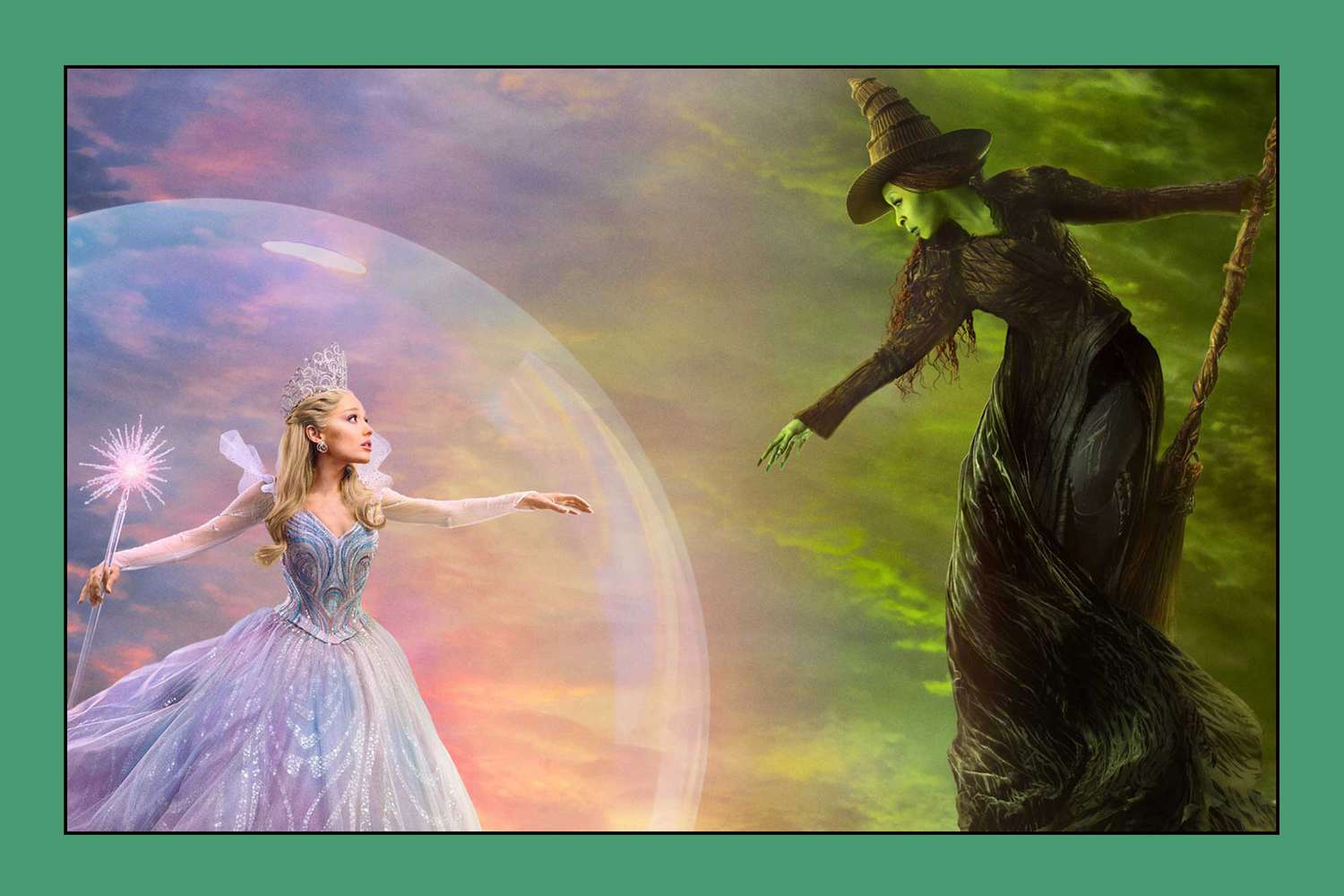
The strengths of For Good (the film) are of course its leads, Cynthia Erivo and Ariana Grande. Both are excellent singers, and their blended voices, to quote a phrase, are “like butter”. Every moment that either or both are singing are the high points of the film. What they are singing around, however, is more than their superior vocal chops compensate for. The film simply asks us to do too much.

Of course, there will be many who are so familiar with the Broadway musical that they will rightly enjoy the singing and just slide along with the familiarity of the story, even if there are a few twists, omissions, and second-rate song additions. But there are also too many implausible situations, plot twists, and awkward attempts to shoehorn this back story into the main story (otherwise known as 1939’s The Wizard of Oz).

But first, the size and breadth of this enterprise have to be taken into account. The film is the epitome of over-production, from the hordes of townsfolks singing so fully that it’s hard to pick up all the words, to the multiplicity of sites and rooms that tend to overwhelm whatever cast member/s find themselves in and what the narrative is working to do at those points. After an overlong and overdone ending to Part One, this film needed a tightening that would help us accept the declaration of friendship that the film keeps dancing around until we finally heard the nearly overproduced version of that famous duet.

Instead, we are tossed into too many subplots that take too much time to unravel, and which don’t need the attention the film grants them. The fact that two new songs (“There’s No Place Like Home” by Erivo and “The Girl in the Bubble” by Grande) were added to the film indicates that the concept of Part Two had been heading in the wrong direction. What the film needed wasn’t a fleshing out but a lessening and a contraction. The film may have suffered from the The Phantom of the Opera and Les Misérables effect, where every darned song had to be fully inserted into the film at the cost of cinematic freedom. Yes, there is irony that to the fact that “There’s No Place Like Home” is sung by the Wicked Witch of the West/Elphaba. But it just adds to the ever-increasing pileup of contradictory elements that are both the basis of the play/film and that ultimately don’t come together by the end.

There will be endless dissections of where the film deviates from the book and the play, but the film is the film, with all its own issues. Here are just a few:

Who is really wicked, and what caused it? What seems a lofty philosophical issue is germane to the film, and the further we get into the film, the more those questions become muddy. Glinda’s move from self-deluded shallowness to some kind of maturity is clear enough, but what of Elphaba? She goes from poor little different child to guarded young adult to attitudinal grownup who chooses evil, and then backs off from that, and then goes back to that, and then…I couldn’t keep track. (Spoiler alert) The film presents her at the end with a somewhat loving partner, a somewhat repentant spirit, and a view of her future life on the set of Dune (both parts).

Then there is Nessa’s journey as the other witch, and that is just as confusing in its shifts.

Aside from the whiplash-inducing changes of heart and character, there are some other puzzlers. We can see from Part One that Fiyero and Elphaba are at the core of the romance here despite the Ken doll/Barbie symmetry of Fiyero and Glinda when they are in the frame. But what was delightfully obvious in Part One as Fiyero and Elphaba discovered each other is here stretched to its logical but not believable conclusion. Their first meaningful glances and growing love worked when they kept their distance from one another, but the “night of passion” scene crashes and burns. For one, we don’t need it in a film like this, and two, what worked at a distance between two accomplished actors doesn’t work when you press them together. It doesn’t help a viewer aware of Jonathan Bailey’s and Cynthia Erivo’s very public gay identities to have to work to accept them as a legit couple. But good actors are good actors, and they both give it their all. But bottom line: There is as much chemistry between them as Julia Roberts and Nick Nolte in I Love Trouble (or more recently, Gemma Chan and Richard Madden in Eternals). The longing looks from the first film were convincing and worked much better at establishing and building their relationship.

There isn’t a weak performance in the film, but there is a distinct difference in how we relate to each character. We connect with Glinda at first based on her joyful silliness and Grande’s acting and singing, but her journey to a level of self-awareness is fraught with so many bumps that it’s hard to stay on her side. We connect in the same way with Elphaba, but her journey is the most confusing. We’re on her side as the outcast at the beginning, but her next series of decisions eventually erodes our connection with her.  The same with her sister Nessarose (AKA The Wicked Witch of the East), whose journey is confusing and bizarre.

Then there is the issue of how this film’s world and characters dovetail into the original 1939 film, and this is where the wheels pretty much come off. Nessa’s death, which we all are familiar with as Dorothy’s first experience in Oz, comes to Elphaba in a dream or premonition, which makes as much sense to us as it initially does to her. Nessa’s romantic interest/slave Boq, played by Ethan Slater, who is by far the most accessible and likable character in this whole enterprise, (big spoiler coming), does an inexplicable turnaround so that he can eventually become…someone from the 1939 film. The monkeys have no idea who they are supposed to be working for, and the “wonderful wizard,” playing along with the good/bad reversal, is revealed in his fullness as a tyrannical and fascist dictator, which doesn’t exactly connect with the original.

The two most evil characters are played by Jeff Goldblum as the Wizard and Oscar-winning actress Michelle Yeoh as Madame Morrible. Goldblum brings a level of quirkiness that is at first endearing (Part One) and then confusing in Part Two as we segue into the Wizard that we all know from 1939, who really wasn’t that bad. Yeoh’s character is just bad as this film’s Wizard and stays that way, and we have no problem accepting that wickedness from such an authoritative performer. Unfortunately, they have also been tasked with singing, and neither can manage it despite being trained in every trick a singing coach can pull out.

Minor points that drove me just a little crazy: Elphaba goes on a rampage about Dorothy’s shoes, not because of their power, which makes sense, but because (huh?) it’s the only way she can remember her sister. Then, in a moment only a handful of grammarians would notice, Elphaba makes a cute reference to “the wizard and I,” which is the name of a song in Part One, but which should have been “the wizard and me” here. I know, that’s nothing, but a cute Easter-eggy reference at the expense of good grammar is borderline…wicked.

This film is going to make a lot of money because of Part One, but it’s already losing its steam, and for several good reasons. It should have been a single film with less pretension, more focus, and a couple of fewer songs.

Posted in Film Reviews, Newer films | Tagged , , , , , , , , , , , , , , , , , , , , , , , , | Leave a comment

The Running Man (2025)

This year’s The Running Man, is a) a sequel to the 1987 film starring Arnold Schwarzenegger, or b) the latest from director Edgar Wright (Hot Fuzz, Scott Pilgrim vs. the World, Baby Driver), or c) the latest from quickly rising star Glen Powell). Of course, it’s all three, but these three descriptions may determine your mindset going in and your thought process going out.

The plot in brief: Family man in need of money gets a spot on a reality show that can win him a billion dollars at the risk of being killed, which is almost a foregone conclusion. Why is this so dangerous? Because there are network goons out to kill you at all times, and there are rewards for anyone, yes anyone, to kill you too.  With Schwarzenegger at the center, the older film knew that it couldn’t be taken too seriously, as its lead was, of course, Arnold, who is indestructible and can’t be taken all that seriously. Plus, not everyone in the world was after him.

This film departs from the Stephen King book and the 1980’s film in several ways, which you can Google anywhere. For me, the two biggest departures are the tone and the lead. The first version was always going to be tongue-in-cheek, and the hits on media, society, and “the man” were touched upon, but not dwelt upon. The new version is cinematic nihilism– not my favorite tone nor theme. This is a dark, beyond cynical, nearly humorless, bloody action film with some great character performances and an aimable central character that bring moments of, if not lightness, then at least some distraction from the fetid pessimism of the rest of the film.

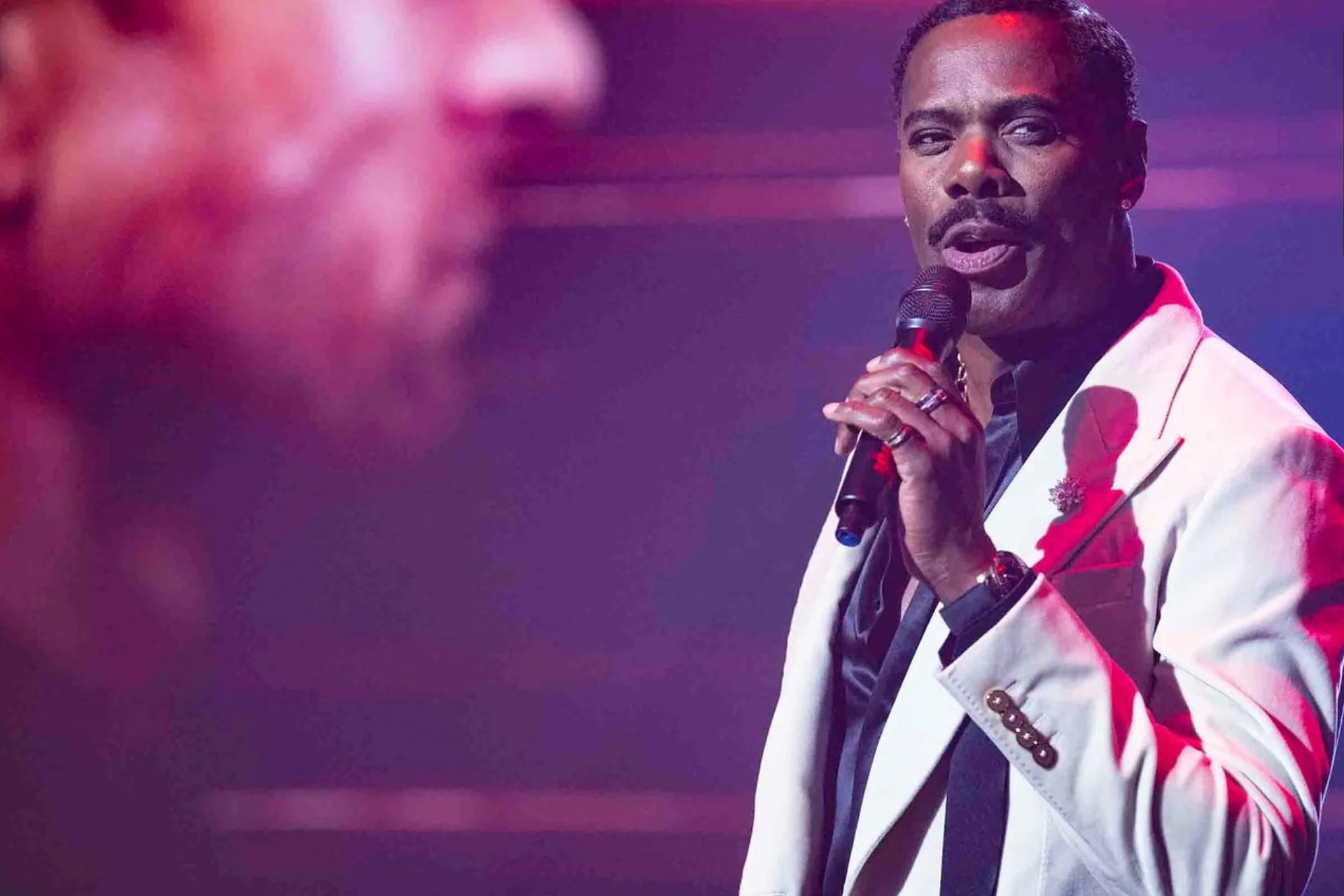
There are some standout moments here and there, most provided by star cameos or intense secondary characters. William H. Macy was a welcome sight, and then a disappointment in his absence. Having Michael Cera pop in as well-prepared conspiratorialist sends the film in an awkward narrative and tonal direction for a while, but it’s an enjoyable side journey. Colman Domingo (above) bites deeply and successfully into his role as the TV show host. He rather brilliantly represents everything wrong with today’s reality TV and media, apparently a sharp indictment of us all. Then there is Josh Brolin, who chomps up his role with the same intensity as Domingo. His role goes from big to bigger to biggest, which is all that should be said before seeing the film.

That leaves us with Glen Powell, the actor currently working harder than any other at the moment to become and stay a star, even at the risk of overexposure. For the producers, he was probably a good and bankable fit. But he’s given two hurdles from the get-go. One is that his character was burdened with a literally incredible situation at the beginning, and then Powell really can’t bring what’s necessary to the role—internally, anyway—until the end of the film. Powell is so likeable a screen personality that we instantly align ourselves with him from the start. The fact that this strong and able man is suddenly unable to get a job is hard to swallow, as is his situation as one who needs medicine for his desperately ill daughter. It’s just a bit much…couldn’t someone have come up with a slightly more compelling and believable set-up for such a risky action? We were already going to side with Powell no matter what, and the film would have been the stronger for a less melodramatic impetus.

There are advantages and disadvantages to having Powell as your star. He’s a great physical action star, and far more human and vulnerable than an Austrian bodybuilder. His action scenes are completely believable, with one ridiculous exception. American films have traditionally found inane reasons to show the female form, even when it doesn’t make sense (for me, the first awareness of how absurd this can be was The Poseidon Adventure and Carol Lynley’s continual loss of clothing). Of course, Paul Newman was quick to go shirtless in many of his films, as was Matthew McConaughey. Right now, our shirtless male star is Powell, and the film goes to unintentionally humorous lengths to show off his physique.

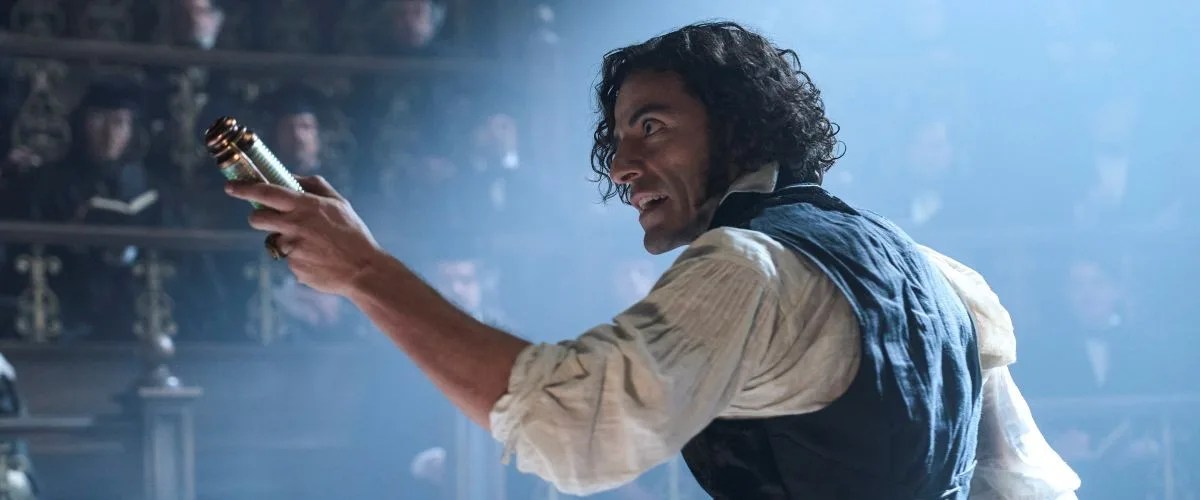
There was the usual post-shower scene where we see what great shape he’s in. But then it gets borderline ridiculous as he has a towel around his waist that undergoes intense strain as he manages any number of escapes that would have pulled it away in a real world. (It’s on him for a wildly unreasonable length of time.) Then HE decides to get rid of it just in time for viewers to see a quick naked peak before he crashes into a possible escape route. It’s on a recent par with what happens with Oscar Isaac in the most recent Frankenstein (https://filmprof.wordpress.com/wp-admin/post.php?post=1982&action=edit). These hijinks take me out of the film as much as a blatant anachronism or a badly acted scene. We know Powell is in great shape. Showing that off shouldn’t be such a key component of the performance.

Then there is a Powell persona. His character here, Ben Richards, is supposed to be angry, very angry. After showing us his anger, his TV interviewer says before he is chosen, as if we need someone to explain it to us, that he is the angriest contestant they’ve seen. Please, again, show (which you did), not tell. But the problem is that Powell has a nice guy/romance lead/slightly humorous action hero vibe. He simply can’t seem to conjure up the anger the film needs him to have. He’s doing this best to “act” it, but he doesn’t seem to have that level of fury, that is, until the end, when he believably screams into the camera; that’s the only time I accepted rage from his character. Powell is the Cary Grant of action stars now: he’s “the man all women want, and the man that men want to be” (or at least have a beer with). The’s not the dark, mysterious, deeply flawed hero the film needs. But the producer’s choice: excellent. Box office guaranteed.

Then there is the multi-layered socio-political-cultural commentary. Having the public at large be able to kill a TV contestant is dark stuff, and it sets the tone quickly. There are a few kind folks along the way who lighten the tone temporarily, but those scenes imply that kindness has become a rare and almost unrecognizable aspect of humanity. This kind of commentary is hard to work in consistently to a film drenched in nihilism. Literally everyone is out to get Richards, and the film implies that from high to low, everyone is out to get…us. Of the other two contestants accepted along with Richards and whose lives are at stake as well (spoiler alert), one is a jerk who shouldn’t have lasted as long as he did, and the other is a cocky woman dangerously living the supposed high life. She lasts a big longer….

The highlight of the dystopian future presented to us, however, is the presence of the reality series “The Americanos”, a hysterically funny near-perfect imitation of “The Kardashians”. Not seen nearly enough in the film, the quick glimpses remind us of the stupid/silly side of the gradual deterioration of a culture. It’s funny and profoundly sad at the same time.

To enjoy the film, you have to connect with constant danger, bloody encounters, a series of betrayals, and a confusing series of messages on morality and society. Then you’re left with an action film with a great if depressing premise, which totally muffs the end. Instead of bringing things to some kind of logical conclusion, the film simply ramps up the volume until you forget that it’s not really going anywhere and not coming to a cohesive conclusion.  

As for Powell, if he’s not the best actor for this kind of film (it needed to be a younger Liam Neeson or Denzel Washington type who could express the conflicted shadings of the character), then he is a great producer’s choice of a star that can prove he can carry a film, even if he’s only surfing the character rather than fully embodying it.

Posted in Film Reviews, Newer films | Tagged , , , , , , , , , , , , , , , , | Leave a comment

Frankenstein (2025)

I’ve not been the biggest Guillermo del Toro fan over the years, especially with his winning Best Picture and Best Director at the 2018 Oscars for The Shape of Water, one of the Academy’s most egregious errors. His new film, Frankenstein (currently streaming on Netflix), isn’t likely to win the top awards, but it will likely (and deservedly) garner a number of nominations and other non-Academy nominations. It’s a visually stunning film that contains some intriguing performances and will be dissected for years to come in the ways it diverges from the original Mary Shelley book and “what it all means!”

The film fairly begs to be described as sui generis, and I found looking at it that way took the weight off the comparisons to the book and the many film adaptations we’ve been offered over the years, with the 1931 as still the definitive version. It’s not a horror film, though it has some frightening moments, and the Creature is not the film’s monster. It’s a rapturously beautiful film in the most throbbing Romantic Gothic tradition. It’s certainly the stark color equivalent to the 1931 classic with that earlier film’s German black-and-white expressionist influences. Approaching it as its own film on its own terms is probably the easiest way in and the best way to take it all in.

To get it out of the way: Backstories are different, the role of Elizabeth diverges wildly from the original or any other version, Victor is obsessed differently, key supporting characters are missing or different, and the Creature is something altogether different. There are different themes from the book, and the social critique is generally missing. Don’t go looking for anything familiar, and you’ll likely enjoy the film more.

And there is much to enjoy. The cinematography and production design burst with color and beauty, even in the midst of actions taking place in dark and dank surroundings. I was less in favor of what the film does with Victor Frankenstein and more in favor of this new Creature. Victor is played by Oscar Isaac, who tends to smolder in his other performances; here he practically sets fire to the screen with an intensity that seems pushed too far and seems overly frantic. In the category of things that take a viewer out of the film, Isaac is number one. He is half-shirtless and wholly shirtless much of the time and it was more suggestive of time spent in the gym than in invention. Then there is a regrettable and gratuitous nude scene that only needed a missing shirt to succeed narratively, and the forced camera angles employed so as not to expose the actor too much were laughable.

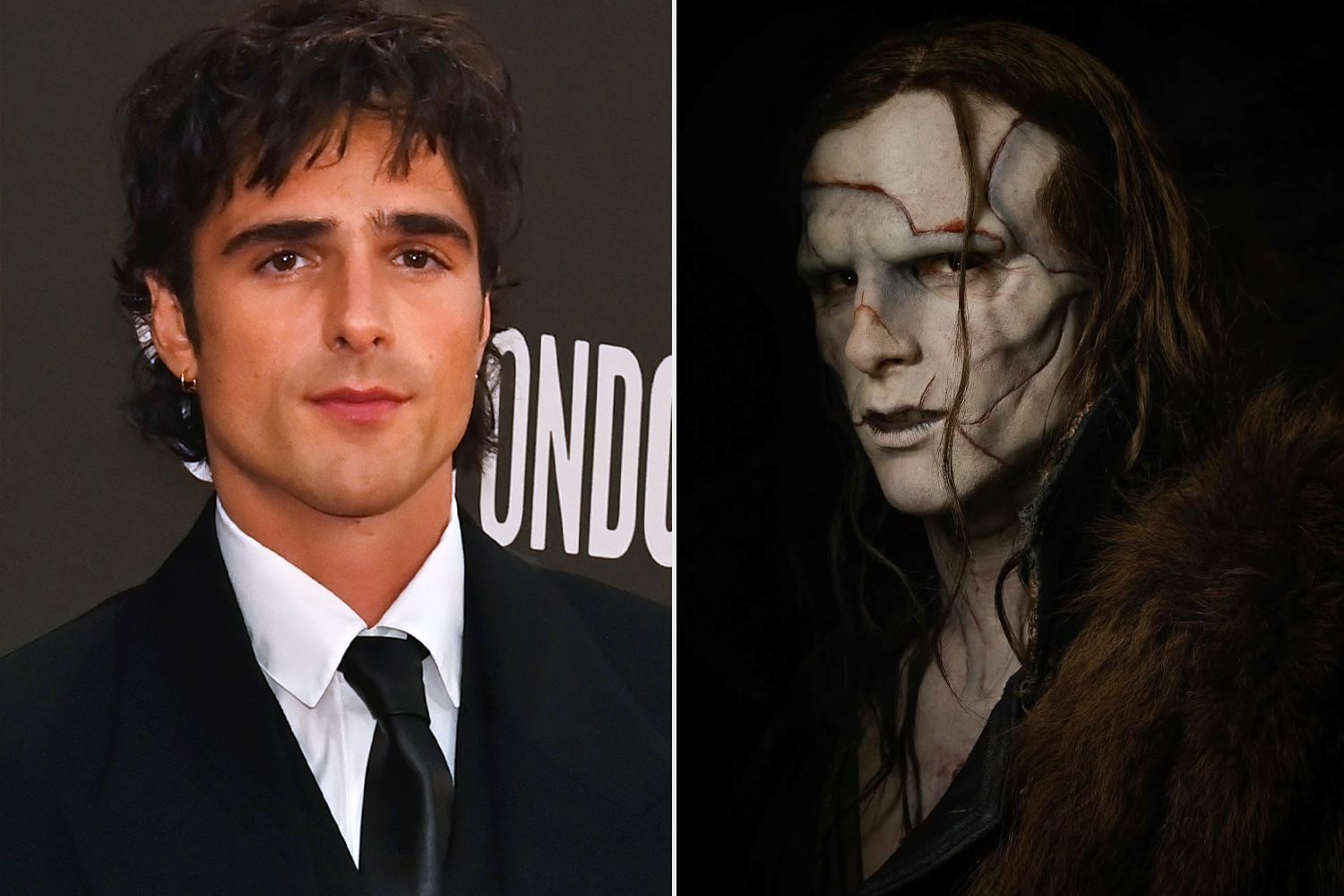
Victor’s counterbalance, of course, is the Creature, here played by very tall Romantic leading man Jacob Elordi (“Euphoria”, Saltburn, and next up as Heathcliff in the new version of Wuthering Heights). This is the best-looking Creature that’s been created so far, but Elordi moves us beyond his heartthrob looks to allow us to see him dig deep into a powerful and yet sensitive performance. What this particular Creature is being asked to do in this film is more complex, and so very different, from any other Creature in film history. He is asked to be absolutely frightening, childlike, confused, able to slowly learn, eventually able to connect deeply with other human beings, and make us believe that he can be both an overwhelming presence and a tormented, sensitive victim of his master’s half-thought-through obsessions. That’s a tall order for Elordi (pun intended), and a thespian journey that may have frightened off other actors. But he pulls it off, stealing the film from under Victor in the same way Boris Karloff did in 1931. At 6’ 5”, Elordi has a strong film presence, but he doesn’t use that power all the time and often sublimates it to more tender concerns.

There are things with Elizabeth that don’t work, IMHO. I didn’t quite understand or accept what Del Toro was doing with her character, and she doesn’t fit as easily into the story as I’m sure he hoped. Felix Hammerer (All Quiet on the Western Front, All the Light We Cannot See) is fine as William, Victor’s brother. But he is more of a story element than a character that can boldly challenge, enlighten, or bring the necessary contrast to our view of his older and more manic brother.

In spite of the heaving emotions and classically Romantic themes and operatic visual treatment, there are also some very gory and grisly elements here. Cadavers are sliced up gruesomely, and some animals receive a very bloody end. The images are presented as matter-of-factly as a character entering a room and are therefore all the more disturbing. Be warned.

Alexandre Desplat’s musical score combines light bell-like sounds with deep and rich symphonic sounds that harken back to the fullness of the richest classic Hollywood scores. It’s a gorgeous piece of work that will likely be performed on its own in future years.

I could spend a great deal of time delving into the ways del Toro shifts away from traditional readings and the book itself. That’s not what this is about. Victor’s obsessions are differently motivated, and the ultimate relationship between Victor and the Creature takes us into new spiritual territory, worth discovering on your own. In a Variety magazine article, de Toro says, “The usual discourse of Frankenstein has to do with science gone awry. But for me, it’s about the human spirit. It’s not a cautionary tale: It’s about forgiveness, understanding and the importance of listening to each other.” That’s not about trying to act like/be God and is a full step away from investigating what can be done with science. As much as invention figures in in the film, it more fully takes its place among the most vivid, Romantic (not romantic) expressions of the dangers of obsession and surprisingly, some of the deepest needs of a Creature who finally stands in for us.

Posted in Film Reviews, Newer films | Tagged , , , , , , , , , , , , , , , , , , | Leave a comment

Nuremberg

Anything that presents the horrors of the Nazi regime is welcome in today’s history-averse world. In that context, I’m glad Nuremberg was made. IMDB succinctly states that the story is that of “[a] WWII psychiatrist [who] evaluates Nazi leaders before the Nuremberg trials, growing increasingly obsessed with understanding evil as he forms a disturbing bond with Hermann Göring.” It’s much more than that. That brief description simply describes the dramatic arc in a film that involves Nazi leaders, international judgment, the horrors of the concentration camps, and obsession.

Since we as viewers are apparently too many years away to assume knowledge of the war, the horrors of that war, and the international response to those horrors (sigh), the filmmakers have assumed that we need a great deal of exposition throughout. There are many moving parts in the film, and some explanation is necessary, but they are too detailed and too many. The film has also been accused of being preachy, an accusation that is deserved, especially as it heads near the end.

The film walks the line between serious and almost documentary drama and flat-out entertainment, often with awkward results. There is a jarring cut from an emotionally intense scene with a senior Nazi to a woman singing an energetic song in a club that I have yet to get over. That is the common weakness of the narrative. The central story is perhaps considered too dark and severe, and in need of lightness and even comedy. Along with the several story lines that don’t always flow together, this back-and-forth between dark and light makes for an occasionally bumpy viewing experience.

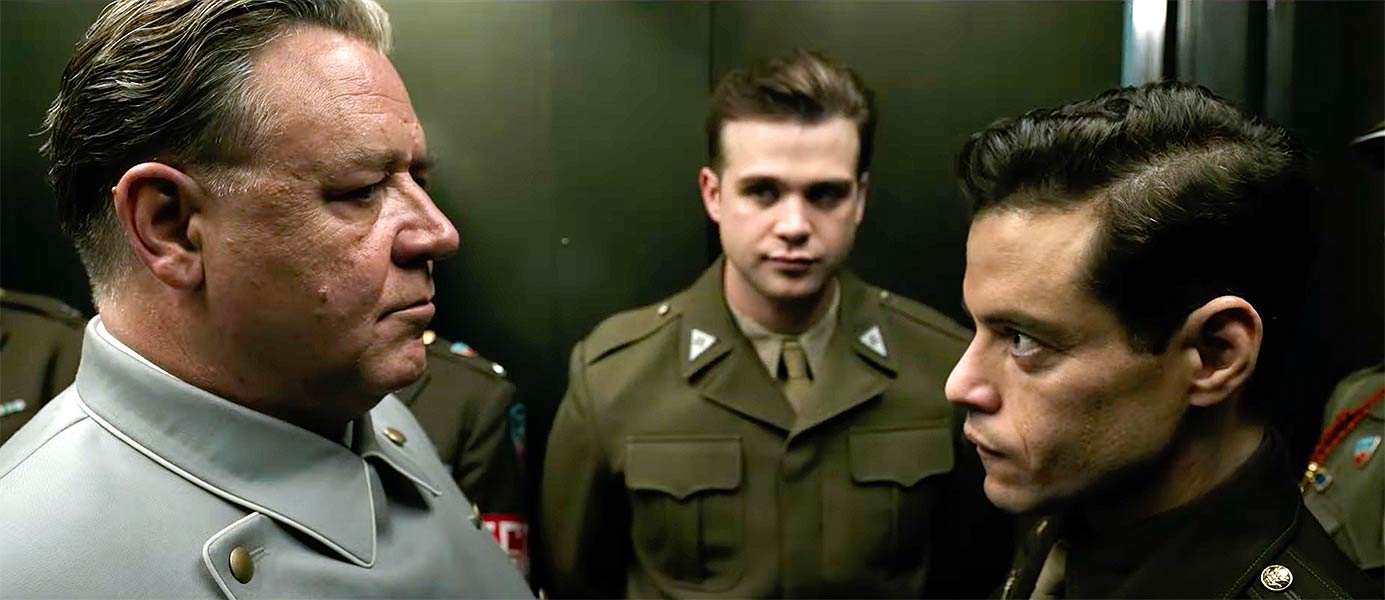
What carries the film, fortunately, are the three central performances, and the two secondary performances. Rami Malek (Oscar for Bohemian Rhapsody) and Russell Crowe (Oscar for Gladiator) are at the heart of the drama, with a fascinating and occasionally confusing relationship that has us questioning motives and who is using whom. Crowe is an incredible screen presence and has times of showing that to an almost overwhelming effect. You can’t take your eyes off him, especially in the courtroom sequences. Crowe introduced a new level of strong male authority into the film world with Gladiator, and here he turns that authority on its head playing a brilliant, articulate, calculating, charming, evil and powerful man. I’m not sure who else could play Göring so intelligently and so bursting with arrogance, self-assurance, and manipulation.

His opposite, at least at first, is Malik’s psychiatrist, who is as active and intense as Göring is eerily quiet and settled. The movie is his story, not Crowe’s, and we are more than willing to follow him throughout most of the film, which makes our discomfort with some of his eventual decisions and statements even more uncomfortably palpable. It’s a carefully crafted performance and has a range and depth that his Oscar-winning performance didn’t possess.

There is another almost-lead performance that surprised me, and that is Leo Woodall (“The White Lotus”, “One Day)”, who begins slowly with a very background performance as Malik’s character’s interpreter. He is a sensitive and accessible performer and quickly gains our attention and allegiance. He eventually makes his way to the front of the film in a deft move, and we find ourselves relating to him more than Malik’s character, and appreciating his work as much as Crowe’s. It’s the film’s biggest surprise in more than one way (no spoiler alert here).

The supporting performances from Michael Shannon and Richard E. Grant are as professional and accomplished as we would expect. They do solid work in roles where that solidity is needed.

The other supporting character is played by a miscast John Slattery. Slattery has a certain authority of his own, but not the kind his character here needs. It’s a combination of not rising to the level of power needed for the character, trying too hard to convey the necessary power, and a continual missing of the flavor and commanding authority needed in the scene.

The music has the challenge of working with the bumpiness of the narrative but generally manages to work well with the narrative without calling too much attention to itself.

One of the biggest misses in the film are its loose ends. For instance, we meet “the girl” on the train, and we can figure that she will become Malik’s character’s romantic interest. She is then shown here and there, and in a great twist (spoiler alert here!) they hook up to disastrous effect. I prefer when films skip over sex scenes, but here we are led to one, and the all-important talking (that we assume comes afterward) is not even shown or heard. A great dramatic moment missed.

Then there is the confusing scene following the trial, with Malik’s character on the radio. It can be read as his opinion after his experiences, an anti-Trump tirade (which it is unlikely considering when this was written and filmed), a warning against antisemitism (completely on the nose right now), or a prophetic look into the dangers of radical Islamists. With those possibilities, you can see why it might come off as confusing.

Then we are given the tradition script on the screen that tells us what happened to them all. What happened to Malik’s character might better off been left off.

For the Malik and Crowe completists among us, this is a must-see. For the move from TV character to quietly riveting performance, check out Leo Woodall, who seems to have a very bright future. For those intrigued by WWII and/or the Holocaust, it should probably be seen, though not necessarily any time soon.

Posted in Film Reviews, Newer films | Tagged , , , , , , , , , , , , , , , , | Leave a comment

Downton Abbey: The Grand Finale

If you’re a fan of the television series or the two previous films—or both—this wrap-up is like a warm and cozy meal on a cold winter day. As with a handful of films, this one is beyond criticism in some ways. If you follow the Crawleys and Granthams and the various ups and down of their lives, you’ll greatly enjoy this film.

Nothing here is shocking, at least by 2025 standards. Creator/screenwriter Julian Fellowes has made a slightly new recipe here out of old but comfortable ingredients. Those ingredients include the living members of the cast (how they got them all together, I can only guess) and a handful of recurring conflicts: What trouble will Mary find herself into? Can Downton survive in the light of someone making bad financial decisions that threaten to turn everyone out on the streets (metaphorically of course)? And, what, pray God, is possibly going to happen to Edith this time?

Not really a spoiler alert: Because Matthew Goode is tied up with other work and since he was barely in the second film as Lady Mary’s oft-missing second husband, it looks like the scandal du jour for Mary is divorce, 1930-style. The film successfully draws us into the social and personal sturm und drang that might be exaggerated but makes the point and puts the film in first gear.

The usual “Oh, my, what a terrible financial situation we’re in!” is both a bit tired and not especially well handled. This moment of angst involved Cora Grantham’s brother, much alluded to but not seen since Season Four’s Christmas Special. With the amiable Paul Giamatti playing the brother, we might expect to see something kind or at least smart. We get neither, and his character’s presence at the Abbey and the story and trouble he brings to the house is probably the weakest part of the film.

Genuine spoiler alert: Everyone ends up in happy relationships. After all, this is Julian Fellowes at his warm and cuddly best, with a soupcon of ultimately unthreatening drama and the occasional “outrageous” comment thrown in for good measure. Of course, we are missing Fellowes’s grande dame and deliverer of the best bons mots, the inestimable Lady Grantham played by the even more amazing Maggie Smith. Her memory and near-presence permeate the film, but we are not without pithy and witty statements; they are simply spread around for many other characters to express.

Downton Abbey: The Grand Finale' review: Crawley clan in a pivotal 1930 -  Los Angeles Times

The strongest aspect of the question of what is to happen to Downton is the continued evolution of Lady Mary into the strong leader we knew she would become. She has perhaps one more wrinkle, but Michelle Dockery still looks pretty much like the Mary in 2010’s Downton. (Side note: Being a film history fan and familiar with the actresses of the last 1920’s and early ’30, I can only say that the costumers hit the jackpot with Dockery, who is a tall, thin, and beautiful clotheshorse that nearly puts Kay Francis to shame.) (Second side note: The women in general look the same, and the men in general have put on the pounds.) Dockery is a better actress than is recognized and masterfully hits every emotional note the script throws her way (and there are many) all while maintaining a great lady’s dignity, not an easy task.

Viewer will be especially happy that Lady Edith, now the Marchioness of Hexham, has found her voice, and it’s a long-awaited pleasure to see.

The film, as the last entry in a much-loved series, has primarily been viewed in terms of screenplay and character. But then there are the production design and costumes, which are excellent. Perhaps the most underrated technical aspect is the cinematography, which includes the kind of smooth Steadicam work and choreography among the characters that is so polished it almost seems invisible.

It may seem quibbling to say that there is nothing new here, but that is the point. Everything is a variation on an old set of themes, with the goal of putting everything in financial and relational order…the ultimate feel-good movie. As a critic-proof film, The Grand Finale should be seen by its fans and ignored by everyone else, for which it might make little sense. The film’s pathway is predictable and a bit corny, but the acting and production values are top-notch. It’s a delightful capstone to a treasured series, and a grown-up alternative this time of year to the horror and gore this season generally puts out.Downton Abbey: The Grand Finale

Posted in Uncategorized | Tagged , , , , , , , , , , , , | Leave a comment

Juror #2

This isn’t a new film, but still a relatively recent one (2024). I saw it on an international flight, obviously not the best context for viewing any film. But Clint Eastwood was the director, so I thought it would be worth the view.

It’s a very mixed bag, with some excellent actors and a fascinating theme. But the actors seemed on their own, with little direction. I have seen many a film that starred good to great actors who seemed to be leaning on their own talents with no one steering them; they do the best they can, but they each seem on their own. This turned out to be one of those films.

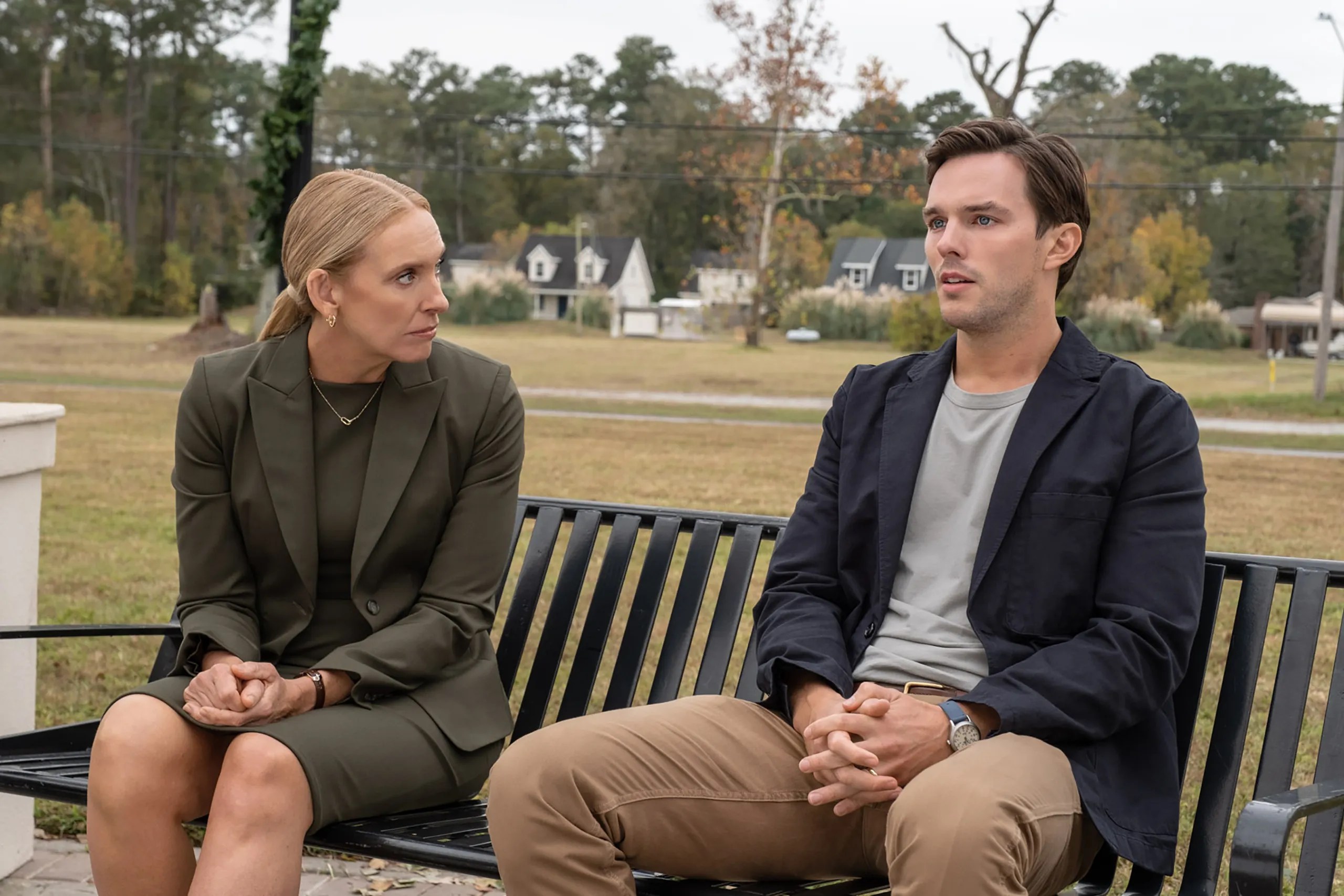
The film stars the incredibly talented Toni Collette (Oscar nomination for The Sixth Sense and who should have been in Chicago…) as a lawyer/politician. At first, she appears to be the traditional “win at all costs” legal shark, but as the film moves toward the end, her character backs off from that persona and digs deeper into her case. Collette of course does the best she can, and she makes it believable, but she is afloat here, doing the best for her character and the plot, but not living in a context of consistent tone and energy.

The other lead is Nichoas Hoult, who has an even meatier part, but seems even more left to his own devices than Collette. (I won’t give away the plot, as that is the strongest and most enjoyable part of the film, until it isn’t….). Hoult’s character is meant to be us, and he does his best, which is plenty. But again, there seems an isolation to each of the characters here, and that is most evident in the relationship between Hoult’s character and his wife. Despite their exchanges, there doesn’t seem to be a strong connection, which notably weakens the film. Ironically Hoult has a better connection with Collette in their scenes together, though they are generally antagonists in the film.

There are other significant performances in the film, but they are meant to be on the side, and that seems to work in their favor. The ever-solid Chris Messina gives more than might be evident as the film progresses. Then who do we see—two folks whose star power threatens to override their character. One is Keifer Sutherland in a surprisingly low-key turn as Hoult’s friend and confident. The other is Oscar-winner J. K. Simmons, a reliably solid character actor who 15 years ago would have fit well into the fabric of the film, but who is now such a big star that his presence is simply too big for his role.

What to say about the courtroom scenes, other than they are a color (as opposed to black-and-white) update on 12 Angry Men? The characters in the jury room again seem to be doing their best, but cliches and stereotypes abound almost laughably at times. If I heard one more person say that they needed to give a quick guilty vote so they could get home for one reason or another, I might have walked out. But I was on a plane.

Then there is perhaps the strongest element of the film, which is the theme of guilt and how we respond to it. It’s an eternal issue, and the film seems to deal well with it until it flames out it at the very end. The ups and downs of struggling with what is right and wrong, and the price one might have to pay for doing the right thing is generally well explored. But that ending: wholly unsatisfying on nearly every level. The film has an Act Three as in most other films (spoiler alert), but then there is an anticlimactic scene that enervates rather than jolts us. It appears to be presented as a stunning kind of second climax, and while it could be read by some as intense, disturbing, and thought-provoking, what it primarily provokes is a “Huh?” from the viewer, followed by a sense of wonder—wonder at what it’s supposed to mean. Yes, spoiler alert again, I understand that on one level it means that things aren’t settled, and that unresolved guilt has no place to run and hide forever. But where precision is needed (badly) to pull things together, we have perplexity.

Don’t tell him I’m writing this, but perhaps it’s time for Eastwood to sit back and rest on his many laurels.

Posted in Film Reviews, Newer films | Tagged , , , , , , , , , , , , | Leave a comment

The 13 Worst “Best Picture” Winners

The Oscars started out well, albeit being a group initially designed to keep union activity away, and to continue to grow Louis B. Mayer’s influence in Hollywood. The first year, they even had to address the “popular pic vs. art pic” scenario that has plagued Hollywood over the years, giving Wings the Outstanding Picture Award and stunning classic Sunrise the Best Unique and Artistic Picture Award. That second award was dropped after its first year, but is a reminder of the tension between art and popular success that is inherent in any art award.

So, in chronological order, are my thoughts on the 13 worst choices for Best Picture. They are not all bad films, and some are quite good. But in the year they were nominated, they never should have won.

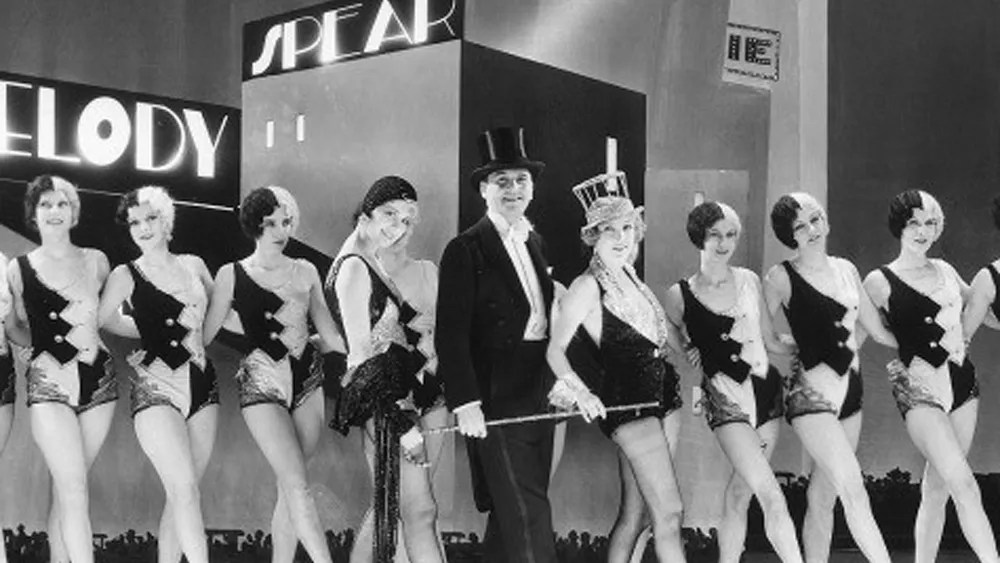
  1. The Broadway Melody 1927/28. This is a landmark picture, but not necessarily a good one. It was a very popular early talkie with popular songs, all backed by Mayer and M-G-M, so it’s not a surprise that it won. But it’s very difficult to watch now, even accounting for its age. It’s clunky, the dialogue is cringey, and the musical numbers are, today, laughable. The better choice wasn’t even nominated: Rouben Mamoulian’s Applause, which is lightyears ahead of the winner.
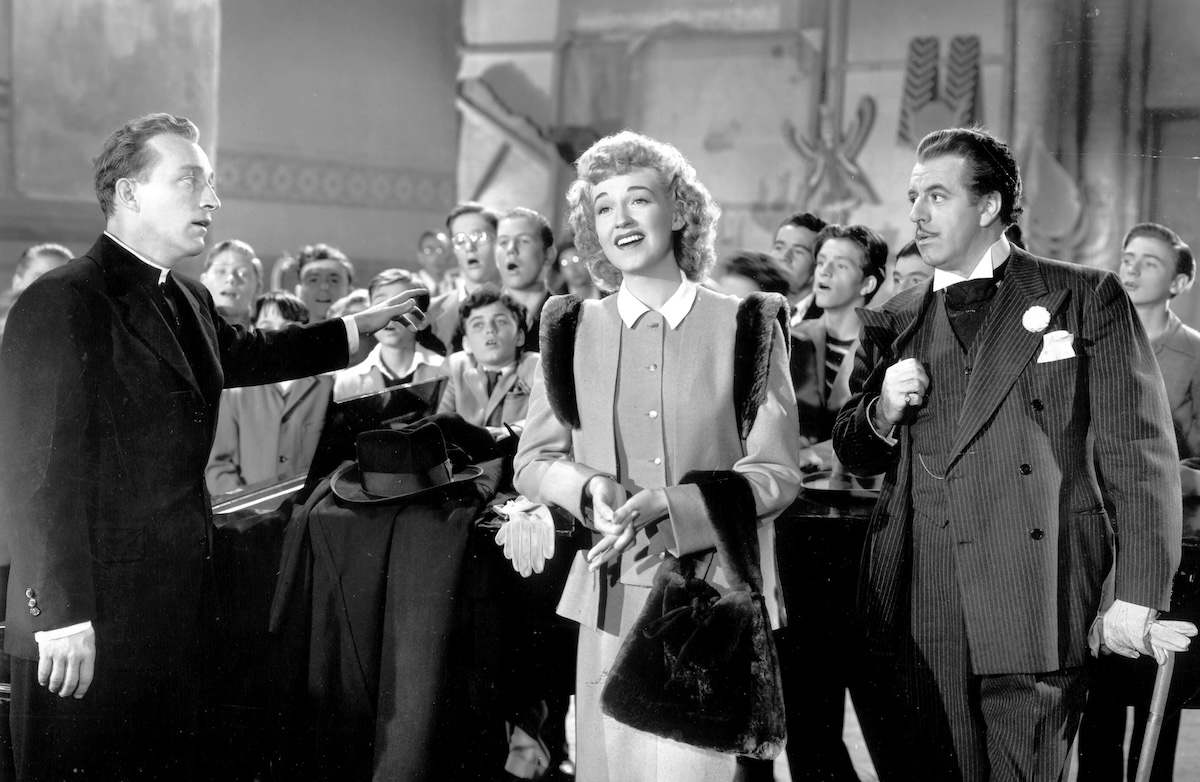
  • Going My Way 1944 Back then, who didn’t the love the music and its star, Bing Crosby? But it was up against the masterful Double Indemnity and Gaslight. Either of those would have been a much better choice.
  • An American in Paris 1951. Don’t get me wrong—I love the film despite its many, many flaws. But this was also the year of A Place in the Sun and A Streetcar Named Desire. I can only imagine that these two intense black-and-white dramas canceled each other out.
  • The Greatest Show on Earth 1952 This almost terrible film is generally agreed to be the worst of the Best Picture winners. There is so much wrong with it, but maybe the Academy just loved a well-done train wreck—I’m referring to a sequence, not the whole film. It was very successful financially (always significant to the voters) and it was initially received as a slightly unwieldy entertainment with many stars and much pageantry. It hasn’t aged well. Other nominees that were a better choice included High Noon and The Quiet Man. But again, the best film of the year wasn’t nominated: Singin’ in the Rain.
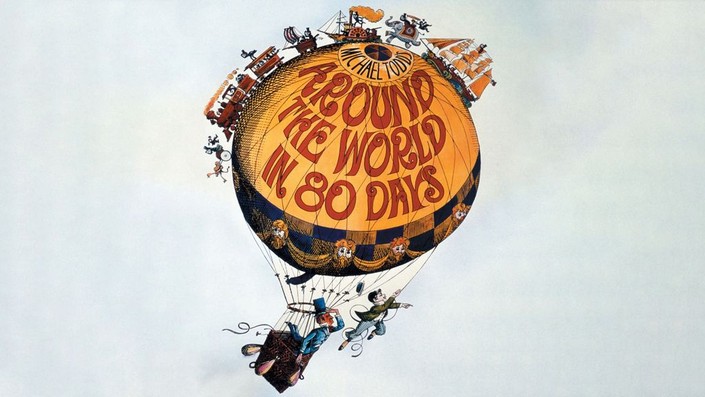
  • Around the World in 80 Days 1956. Gigantic, all over the place (literally and figuratively), and bloated. That year’s Giant is subject to some of these same criticisms, but it’s a much more important and better directed film. And even The King and I, which of course “is just a musical” (sigh) is a finely crafted and acted film. As with 1927/28 and 1952, the best film of the year wasn’t even nominated: The Searchers.
  • Rocky 1976. I feel unamerican just writing this, but come on! This was also the year of Bound for Glory (which was never going to win), Network, Taxi Driver, and the best, most prescient, and most sophisticated of the year, which has since become a classic: All the President’s Men.
  • Ordinary People 1980. It’s a good film, especially for a first directorial effort (by Robert Redford). Coal Miner’s Daughter, The Elephant Man, and Tess were never going to grab the big prize. But not honoring the rough but brilliant Raging Bull was highway robbery.
  • Forrest Gump 1994. As with Ordinary People and Raging Bull, we have a popular and mostly well-respected feel-good film. It will likely be popular forever. But then there’s The Shawshank Redemption. Really, is there any comparison?
  • Shakespeare in Love 1998. This win over the more deserving Saving Private Ryan is a testimony to the wicked power of Harvey Weinstein, who must have either wined and dined voters, or threatened them with some kind of unwanted exposure, to have this win. This isn’t the only Wein-Stain in history, but it’s the biggest one.
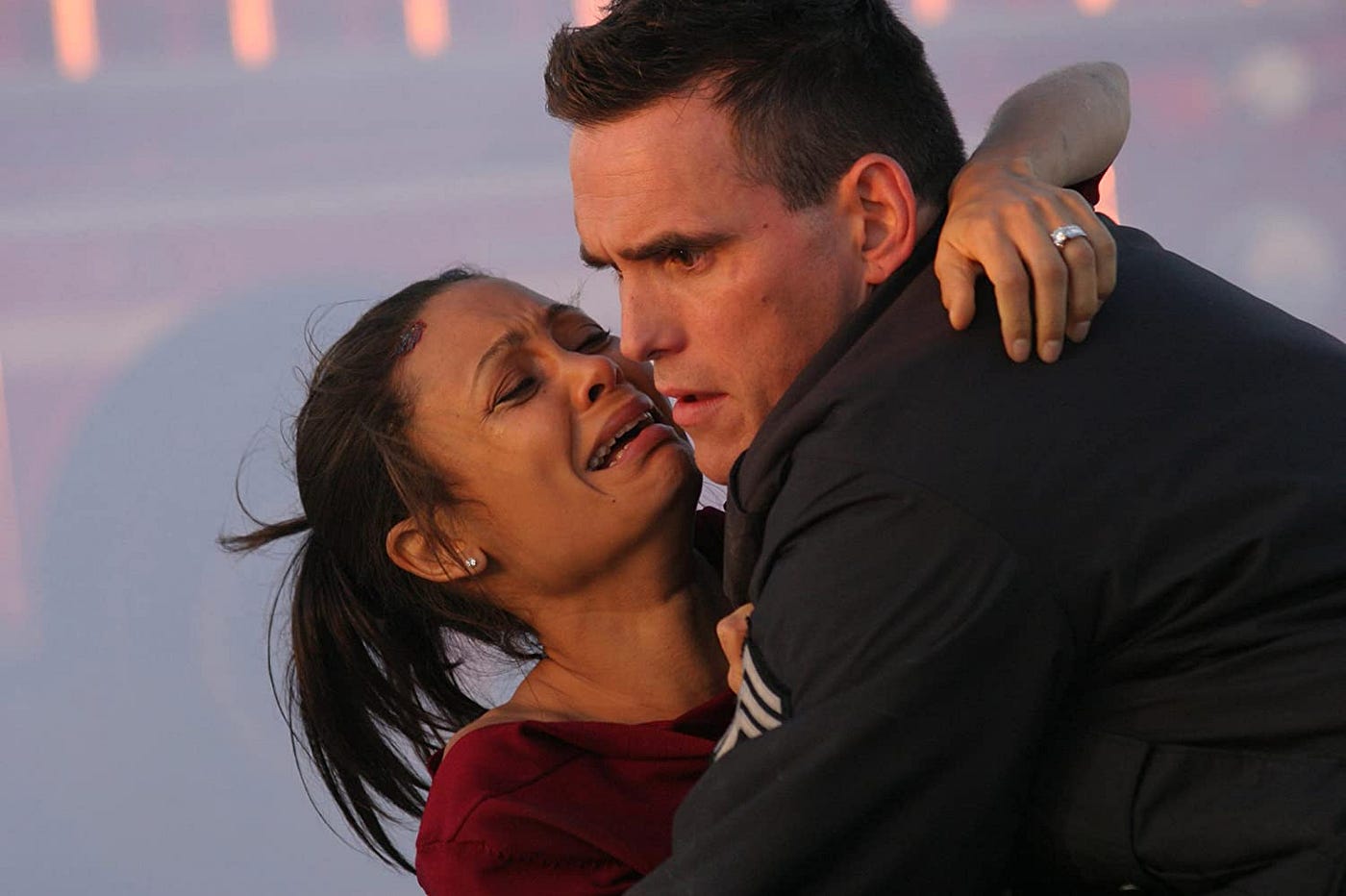
  1. Crash 2005 this shouldn’t have even been nominated, and it’s essentially been forgotten beyond this its role as one of Hollywood’s most egregious mistakes.
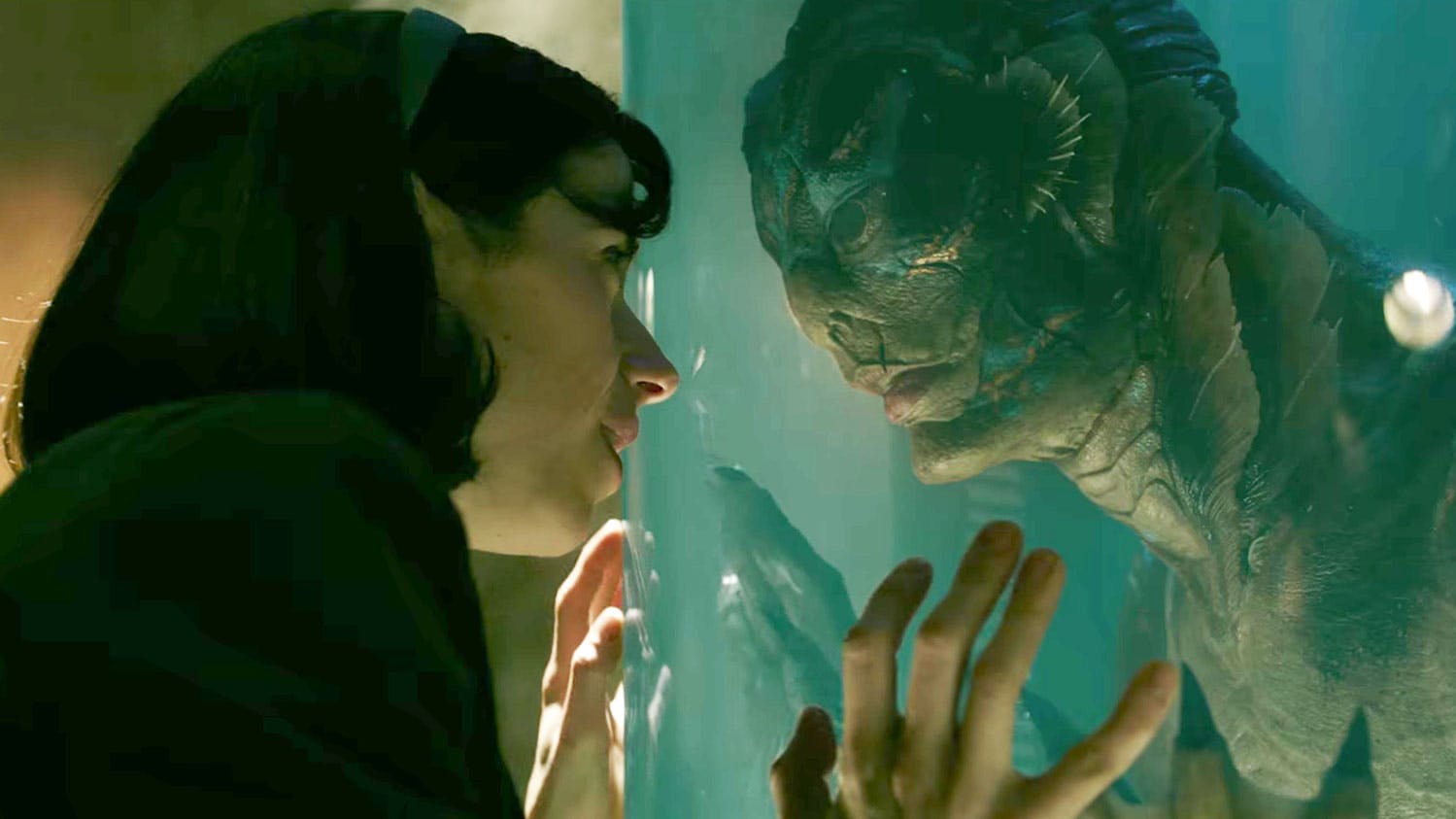
  1. The Shape of Water 2017. My head is still reeling over this win. I guess folks thought it was time to reward director Guillermo del Toro (Pan’s Labyrinth, Hellboy). I suppose there are times when it’s “time” to reward someone. This isn’t the time. This isn’t the director, and this certainly isn’t the film.
  1. Green Book 2018. This is simply an embarrassment. It’s not bad, but it can’t hold a candle to Roma or A Star is Born. Not sure what happened here. My guess is that it’s the fortunate winner of votes that were spread all over the place for other films. Or it could be that Roma was done by a streaming service (and we can’t encourage that!) and there was and is a reluctance to honor Bradley Cooper.
  1. CODA 2021 See Green Book for my guess as to what happened here with the voting. CODA is a fine little film that highlighted the deaf community, which pulls the ever-ready-to-be-plucked virtue signaling string for the Academy. But look at some of the others: Dune, The Power of the Dog, and West Side Story. These three will remain, and CODA will melt into the background.

There are many other films that could be part of this list, but they don’t meet the level of egregiousness that I believe these films do. A case can be made for Cavalcade, Braveheart, You Can’t Take it With You, the infamous How Green Was My Valley, Hamlet, All the King’s Men, Oliver!, Ghandi, Driving Miss Daisy, Dances with Wolves, American Beauty, Chicago, The Artist, and Argo. These are not bad films, and some are quite good. But the earlier 13 listed are just the most painful.

Posted in Film-Related Articles | Tagged , , , , , , , , , , , , , , , , , , , , , , , , , , , , , , , , , , , , , , , , , , , , , , , , , , , , | Leave a comment

Superman (2025)

Bottom line: Just go see it. It’s really good, albeit with a few big flaws, but it’s a great reset to the DCEU and the Superman franchise. For those choosing not to see it because of so-called “woke elements”—if you choose to politicize beyond the occasional politicization that co-writer and director James Gunn introduces—you’ll miss the larger picture. There might be occasional commentary here and there, but the main story is bigger and better than that.

The film has two “shadows” over it. One it the complicated and contradictory mess of current events, which are addressed here and there. Any film can be read politically by those who live and think primarily in a political mindset, and Superman provides enough opportunities for those poised to read it in that context. Yes, he’s an alien, and therefore an immigrant, and there are plenty of comments made on that subject that ring today’s bells. Gunn also makes the occasional social comment, the very best (and by far the single best moment in the film) being the quick shot of monkeys working their social media outlets with “negative reviews.” It’s funny on its own, and nearly everyone can relate to that, but those that know Gunn’s unfortunate history with social media can enjoy it on another level.

The other “shadow” is the history of Superman in comic and cinematic forms. I tend to work hard to view films as stand-alones, and not just as sequels, or prequels, or films working to upend their primary source. In that mindset, I will say that IMHO, this is the best Superman since the 1978 Christopher Reeve version. As all superhero/Superman films belong to their times, it can be fun and instructive to see how they reflect or comment on the times in which they were created. I can’t help but being familiar with the Superman myth, having watched the George Reeves version as a kid, and enjoying the 1978 version, and lamenting those films that followed.

Here’s what I liked about this new version. The three/four main actors (counting Skylar Gisondo in the subordinate and confusing role as Jimmy Olsen) are excellent. Nicholas Hoult as Lex Luthor is the very embodiment of obsessive hatred and jealousy, and he gives his substantial all to the part. I’ve been impressed with Rachel Brosnahan since her work in “House of Cards” and especially “The Marvelous Mrs. Maisel,” and she makes this Lois Lane not just her own (hard to do), but she makes it one for the ages. She’s funny, whip-smart, and never lets on the she is in a DCEU movie. She’s the snap, crackle, and pop of the film.

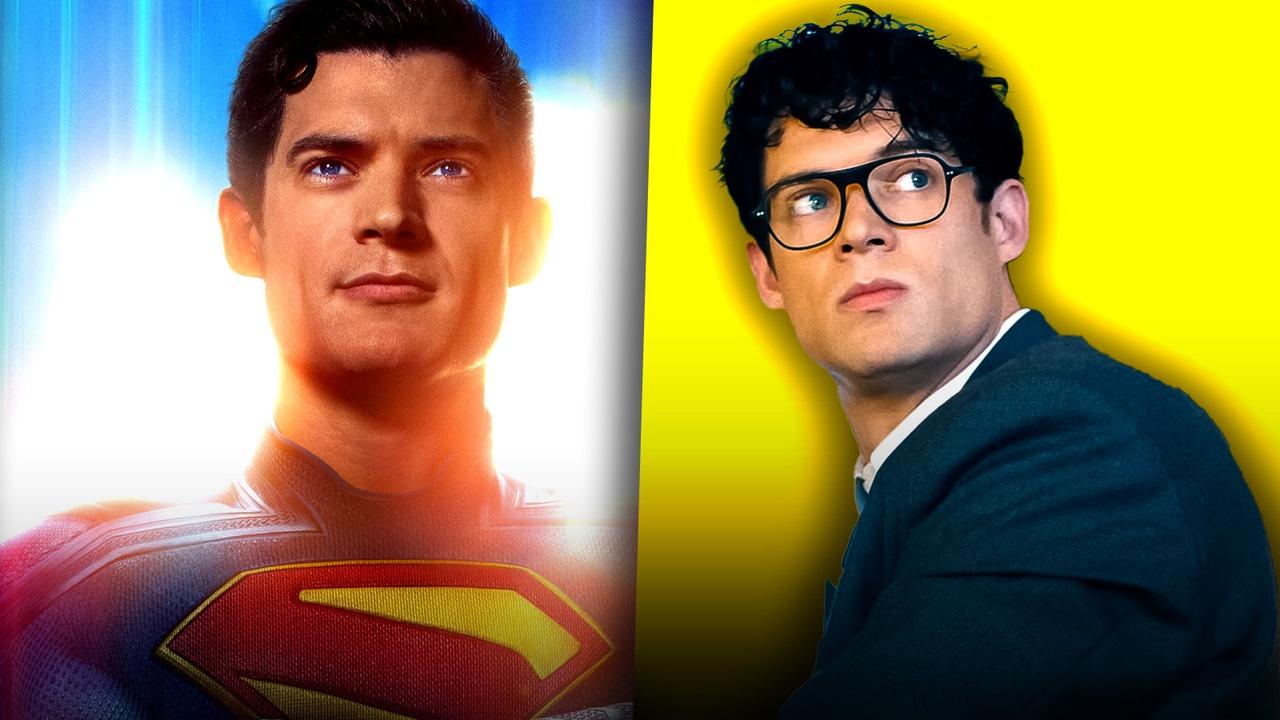
Which of course leads us to the lead, David Corenswet (“Hollywood,” “The Politician,” Twisters). He fits this version perfectly for this new take. He’s sincere, funny, smart, and of course, has the requisite look and build. He is in stark contrast to Henry Cavill’s darker, more serious Superman, so that works in his favor as a creative divergence. He doesn’t hit any wrong notes even while stuck in some wrongly written or directed situations. He acquits himself well with whatever the film throws at him, even though the film’s tone is all over the place. What holds everything together is strength of those three central performances.

This conception of Superman is of course one for today as well as fitting into the “for all ages” myth. Of course, as a Gunn production (think the Guardian of the Galaxy films), it has more humor and lightness than most, and Corenswet admirably weaves his way through all the twists and turns of plot and tone. The basic scheme of course is the same: Superman good, Superman strong, Lois punky, Luthor horrible, Jimmy sweet, Kryptonite always a danger. Nothing new here, but how they various elements are handled fall somewhere between imaginative and entertaining and questionable.

We are thrown in media res instead of dealing with setting up who Superman is, where he is from originally, where he grew up, where his alter ego works, and who is archenemy is. Smart choice. But there are simply too many times our hero is shown in a weak position, including our first view of him in the ice. Not the Man of Steel we are used to, but it does present him as vulnerable. That repeats itself more than once, including an excruciatingly long sequence of him under the Kryptonite influence (a scene which includes an unexpected and gruesome murder that small children shouldn’t see.) As is typical here, the victim happens to be a nice Muslim friend of Superman’s, which can be politically interpreted in any way you want (or just accepted as a way of seeing how awful Luthor can be). 

There are pocket universes which are never clearly explained, and there is an absolutely unbelievable subplot (which graduates to a legit plot point) with Luthor’s shallow girlfriend inexplicably in deep, deep love with Jimmy Olsen. It’s worked nicely into the plot toward the end, but it never passes the believability test.

Everyone tends to love Clark’s rural parents, but here they are presented, unfortunately, as loving but absolute rubes who don’t quite know how to use a cell phone. It’s embarrassing, and can be interpreted as a negative comment on folks in a rural landscape. And in another twist, it’s the dad who is the emotional one. OK…whatever.

Lastly, on the negative side, there are a few other issues. The obligatory massive fight scenes full of CGI wonder are one too many and tend to exist by themselves. I would love to see a shorter fight scene sometime with a tighter focus, a greater connection to the characters, and a more obvious emotional core, but that’s not part of the structure of these films. Gunn goes one too many in the individual rescue sequences, which include a young girl (aww), a woman who needs to be told how to breathe (OK), and a squirrel (huh??) With all the chaos around him, the Caped Crusader is spending his few precious rescue moments on a rodent? Some interesting ideas can go on a bit too long. Same thing with “the dog” … an interesting and fun idea that get s-t-r-e-t-c-h-e-d as well.

So why am I positive on Superman? I love the idea of a more nuanced and sensitive central personality, even if his times in peril keep robbing us of his action scenes genuinely playing the hero. The various aspects of this character add color and variety. Corenswet as Clark is a joy to watch, and he meets his equal (Lois) with humor. The now-famous interview toward the beginning between Lois and Superman is gold, with genuine issues being addressed while fleshing out characters and personalities at the same time. Great idea, well executed. The dynamic between Lois and Clark is the best part of the film, and the only downside to that is that there aren’t more scenes just between those two. Great chemistry is hard to find, and we want more as the film goes on. But the glue that still manages to hold all things together are the three central characters that never lose their focus, and some of the most endearing and talented acting in a superhero movie. These are not recessive characters by any stretch, and that keeps the film buzzing and alive. Luthor/Hoult (spoiler alert) is sent to prison at the end of the film, but just as long as the next film (he writes with hope) keeps Corenswet and Brosnahan together, I have hope for this new chapter.

The film also cleverly addresses the “collateral damage” issue that other superhero films have struggles with (and generally can’t seem to work out.) This film allows many a creature to be brutally sacrificed, but they aren’t human. And many a building gets destroyed, but there is precious little human life lost. We get the big fight and the destruction without the guilt of the loss of (human) life. It’s a quiet victory in the film, but Gunn pulls it off.

Gunn tries to do too much, and not all of it works. But he keeps things moving, with humor that mostly lands where it should. This is a completely new reboot to the series, and its one that has the elements that can sustain a respectable and enjoyable series.

Posted in Film Reviews, Newer films | Tagged , , , , , , , , , , , , , , , , , , | Leave a comment